Danakil Depression
It’s no secret that Mother Nature loves to get weird, and man it when she does. But of all the freaky creations she’s dreamt up during her 4.5 billion years of existence—god-like mystery monoliths, swirling crimson deserts, oceans that glow—one of the strangest has to be Ethiopia’s Danakil Depression. This volcanic region is known as a geological wonder and it is located in one of the most barren and arid regions of the planet. The Danakil Depression is one of the most exceptional sites that exist, composed of hardened lava covered with a thick layer of salt. Danakil Depression seems more alien than Earth-like and it is the hottest place on Earth and during the summer months, temperatures can get up to a high of 55 degrees Celsius (131 degrees Fahrenheit) thanks to geothermal heat caused by volcanic activity. Also, the place is one of the lowest (over 400 feet below sea level) and it attracts three main types of people to the area: salt miners, scientists and travelers. As one of the hottest and most exotic environments on Earth, the Danakil Depression is helping to redefine the conditions for life on our own planet and beyond. Many travelers attracted by the depression’s alien-looking landscape. As they have done for centuries, miners travel hours — often by camel caravans — to extract salt slabs from the flat pans around Lakes. Salt is the region’s “white gold” and was a form of currency in Ethiopia until the 20th century.
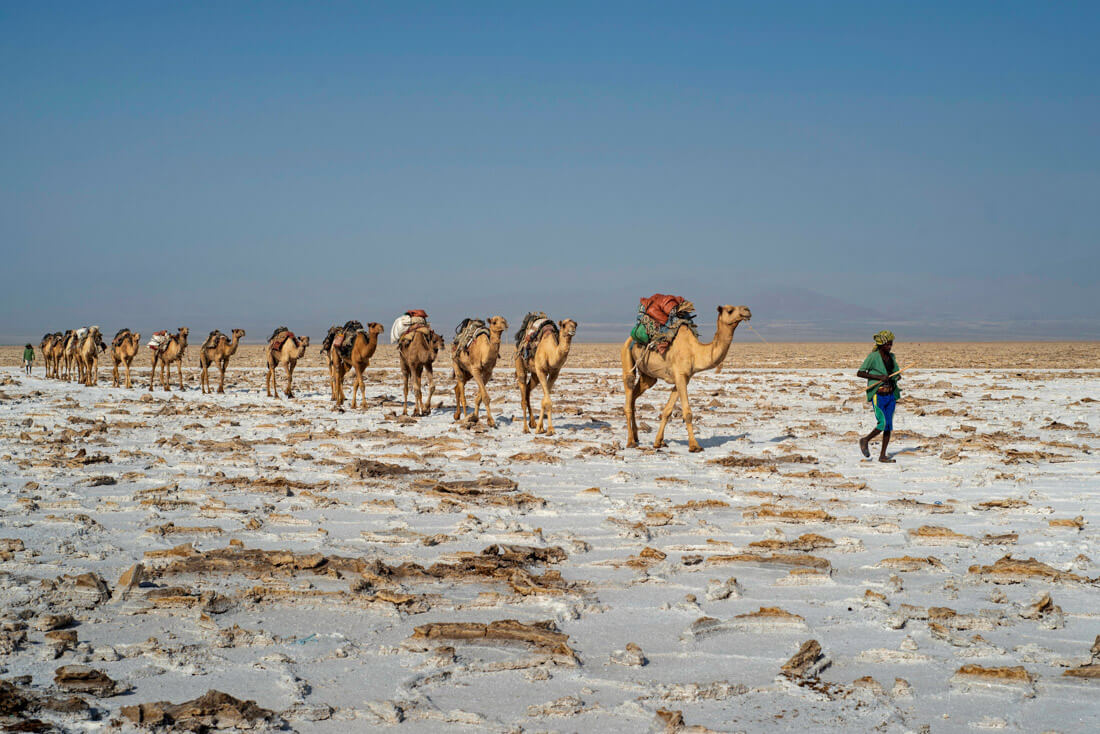
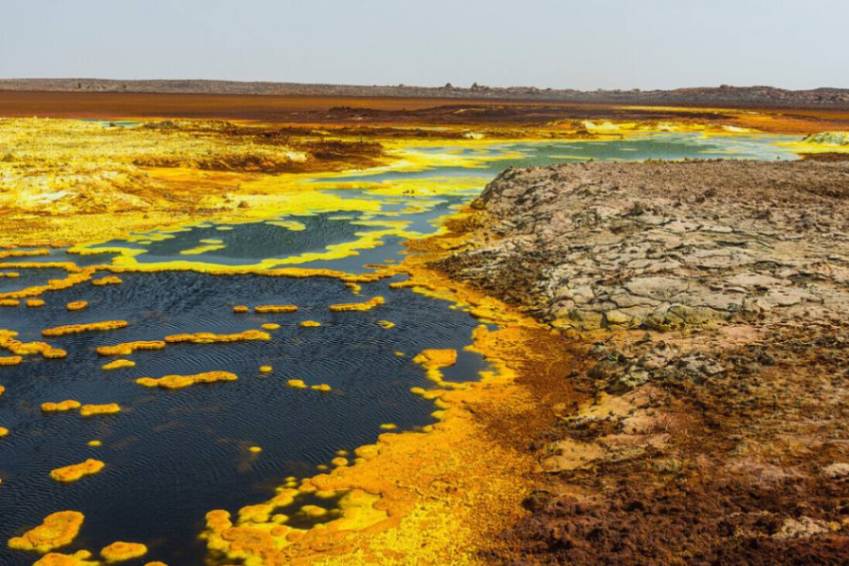
The Danakil Desert is situated in North-Eastern Ethiopia of Afar Region and it lies about 410 ft (125 m) below sea level, and is one of the hottest and most inhospitable places on Earth. Temperatures average 94 degrees Fahrenheit (34.5 Celsius) but have been recorded above 122 Fahrenheit (50 Celsius). Numerous sulfur springs, volcanoes, geysers, acidic pools, vast salt pans, and colorful mineral-laden lakes dot the area, which formed above the divergence of three tectonic plates. Volcanic activity heats spring water, bringing sulfur and iron to the surface, leaving behind yellow, green, and orange deposits. For centuries, locals have been trekking in with camel caravans to mine the salt by hand. Most part of the depression is covered by salt flats and other areas are covered by basalt flows, shield volcanoes, and cinder cones. Several craters up to a mile across can be seen on the salt flats. These are thought to be maars formed by phreatic eruptions. The sulfurous hot springs, acid pools, steaming fissures and salt mountains of the Danakil Depression resemble scenes from a science fiction movie. But the area is very real — and it’s one of Ethiopia’s top attractions. The Danakil Depression is known for being one of the most yellow places in the world, shades of reds, blues and greens also litter the landscape.
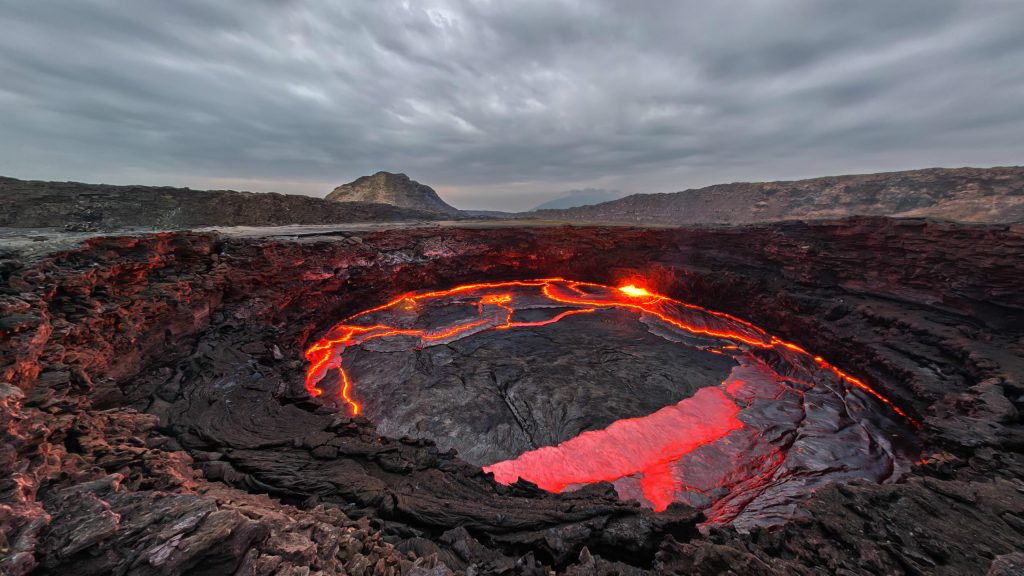
For Travelers, the two most fascinating sites in the Denakil Depression are; Dallol and Era Ale Volcano. Currently Dallol and Erta Ale, volcanic areas in the southeastern part of the Danakil Depression, frequently visited by tourists. ‘Dallol’, which means disintegration in the Afar language, is the section that is home to colorful, otherworldly formations. Here, magma heats groundwater, which wells up and dissolves salt, potash and other minerals when emerging through hot springs. Brine evaporates, leaving crusty formations colored by minerals, iron and salt-thriving halophile algae to create this multicolored scenery. The visit of the Dallol volcano will offer travelers a spectacle of incredible colors due to the presence of water and acids. ‘Erta Ale’ is an active volcano and it is unique. This is the world’s lowest lying volcano and it is also home to the world’s longest-existing lava lake, which is one of only six in the world. A lake made of lava is exactly as cool as it sounds. Standing at the edge of an active volcano and watching the molten rock bubble away is at once mesmerizing, humbling, and scary. And throwing rocks into the lava is wildly satisfying.
Check out these Awesome Tours